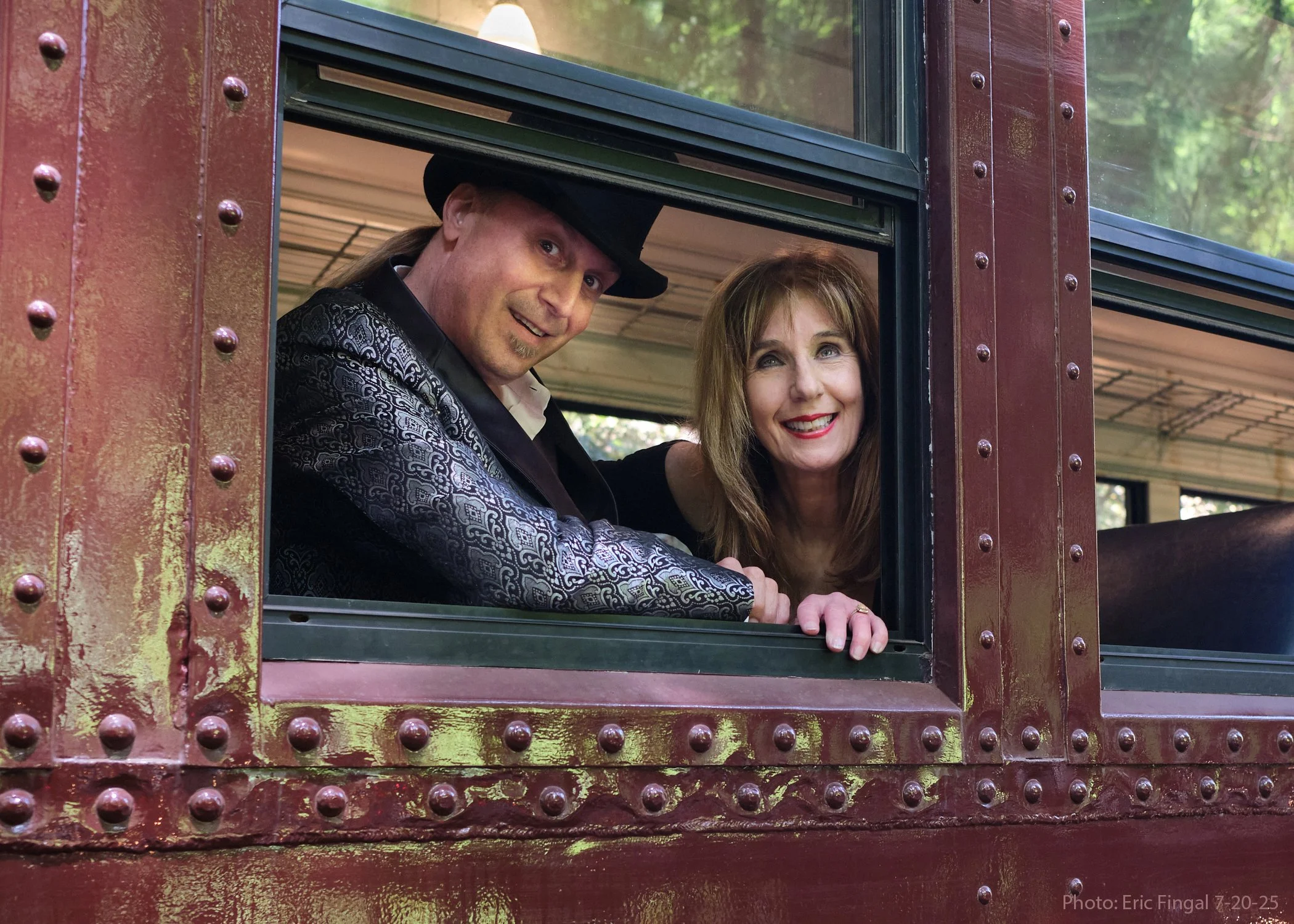
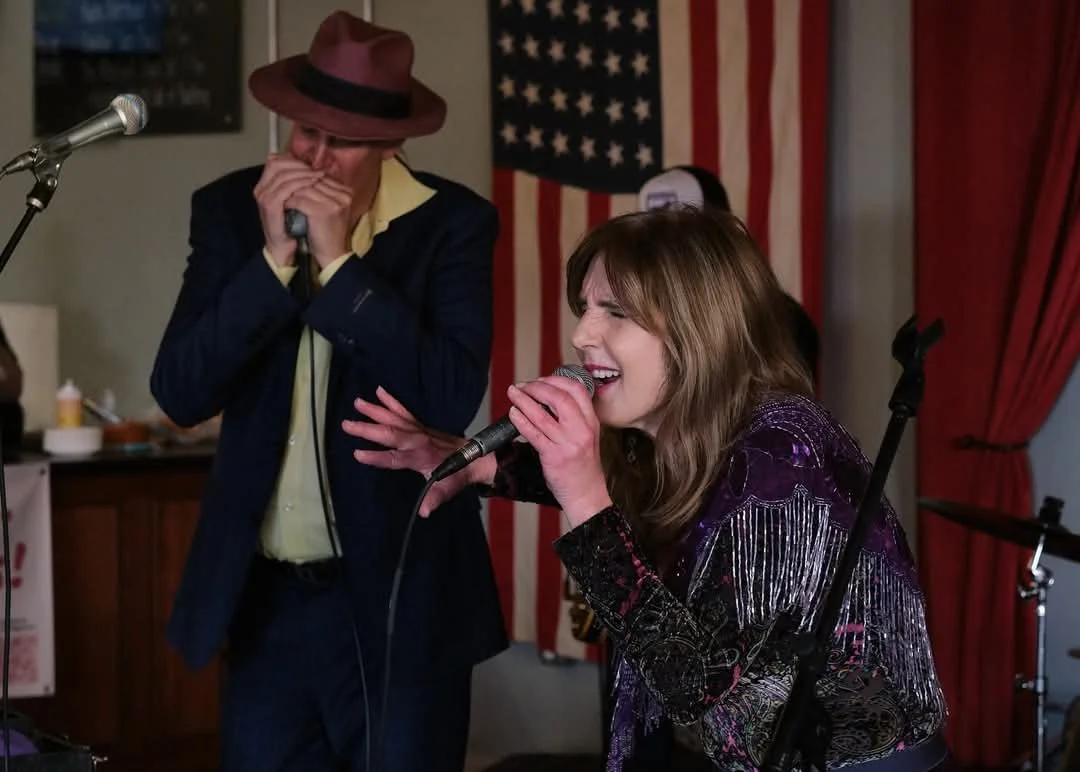
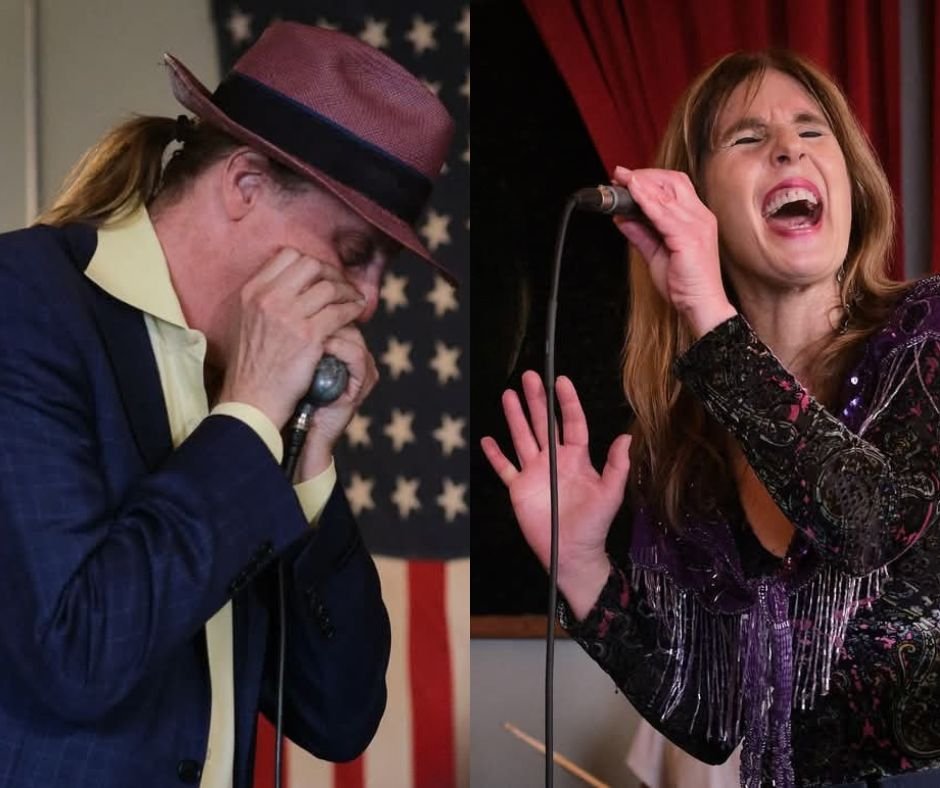
(The Lucky Losers / Photo by Eric Fingal)
Currently you’ve one release titled “Arrival” by MoMojo Records. How did that relationship come about? Do you have any interesting stories about the making of the new album?
Cathy: Well, it was me who found MoMojo. I looked at the radio charts, and saw what labels were doing well for their artists. Nola Blue was right up there with Alligator and Forty- Below.
I organized our songs on Dropbox, with photos, album credits, artwork, and I submitted our finished album. Debra Clark of MoMojo loved “Arrival.” We were about to leave on a month’s long tour, so that helped. We are hard-working and well organized. Phil books our tours. We are self-starters. If the label pushes, I’ll push harder.
“Arrival” which has 11 original songs (split in half between Phil & I as songwriters) took two years to create. Phil works with the brilliant guitar player, Danny Caron. They had 4 great songs. I heard the demo of “Sunday Stroller” and knew it was a hit. I just push Phil to finish his songs. He has all these lyrics all over the house on Post-it notes. I make him type up his lyrics. I yell at him (laughing.)
When I booked the studio time with Kid Andersen in February of 2025, I went to work and started looking up the music I wanted. I had the lyrics.
Making albums is like compiling short stories together. I usually write lyrics in the van while on tour. I wanted “Arrival” to have stone blues, combined with soul. The idea is we’re moving, arriving. On our way.
We are not afraid of taking risks. We are not going to allow anyone to stick us in box – a boring blues shuffle box, where everything has been done before, where you can never measure up to someone as great as B.B. King. Why not be yourself? If you are going to fail, fail as yourself.
I was molested as a child and I finally created lyrics that can touch on that subject without being – well, a victim. I was a smart, tough little kid and I tricked my molester. It’s an empowering song. It’s a #metoo song for all of us women.
This is a personal album. It’s focused. We have arrived.
Phil: One funny story is when we went to extremes to create the one duet, “Ain’t the Marrying Kind”. It was just Cathy, Kid, and myself at the tail end of the recording process. So we all clapped our hands in unison and stamped our feet to create the back beat. We needed a drum. But we had no drummer, so we made one. It was pretty funny. The room shook.
Another good story is when we had to do a make-up session because some of the tracks didn’t cut the mustard. So, I was overjoyed to bring in my mentor, guitar player, Danny Caron to play on songs such as “My Father’s Song” and “Sunday Stroller,” which we wrote together. That’s the first time I got to work with Danny since my 2009 album, “All Night Party”.
We brought in the A-team. We used Endre Tarczy on bass and Paul Revelli on drums for those two songs. It was effortless, but at the same time, they all came in so prepared.
Before that A-team session, I had a dream where I was living in a gymnasium. I decided to take the bull by the horns and started singing that Commodores song, “Sail On,” and a bunch of people joined me as I marched through the gymnasium.
What are some of the most important lessons you have learned from your experience in the music paths?
Cathy: Don’t listen to anyone but your soul. Don’t let anybody stop you. Don’t let anyone discourage you. And ladies, remember, if a musician does not work out, there are 20 better ones waiting to work with you in the wings.
And my greatest advice is to copyright your music and publish it through your own publishing company.
Write! So, what if somebody doesn’t get it, because somebody WILL. And music lives FOREVER. My favorite piano composer is Erik Satie. Satie was laughed at by the critics of the late 1800’s. He was the father of modern music, and the critics wanted sentimental puff. He was impoverished his entire life because he refused to write a note he didn’t love. He carried on. Millions love his music today. Satie died in 1924. He had never even been to a doctor. He lived in a hovel. But he made beautiful music that will live forever.
Phil: My lessons have to do with learning humility. Making a record is a collaboration. It’s the same when you tour. You have to think in terms of the greater good. You have to learn how to cooperate and let go of your ego.
I have also had to humble myself because of Kid being such a huge presence in the studio. Kid Andersen coaches me in my harmonica lines and has since our first record in 2015. I play some lines, and then he tailors them a bit or even sings a new idea. I compromise. The result is some inventive stuff.
How can a band/musician truly turn the blues into a commercial and popular genre of music for today's audience?
Cathy: By not trying to. A person composes from their experience, from their heart. Don’t think. Do. “Don’t try.” That’s a Charles Bukowski quote. Look, A.I can make music. But it’s not interesting. Why? Because art is mysterious. And those Nashville companies using A.I. are pumping out crap. In fact, I would argue that most of the popular stuff you hear is pure crap. Blues and Americana are different. Be different. Write songs from your life.
Phil: Stop following the same formulas that everyone else uses within blues. The thing that turned the kids off to blues is living in the past. They don’t want to hear about living on a plantation in Mississippi. That depresses them. Find a way to reach these young people through your honest reflections about NOW.
Find your own voice and those 10k hours you put in listening and playing blues will come full circle when you create something new. The sooner you realize your full potential while realizing your true self, the more capable you will be to blaze your own trail. Don’t go by anybody else’s dictums. You know your own potential. It will come out if you let it.
How does your hometown (San Francisco) affect your music? You’ve worked in many different settings, from clubs and studios to open-air festivals and bars. How do you navigate between these different worlds?
Cathy: Well haven’t you heard? They wrecked my town! “They came in with fists high and sold us away” (From my song “They Wrecked My Town.”). San Francisco wanted to be compassionate so they made shop-lifting essentially a crime that can’t be prosecuted. Stores closed. Everywhere. They have crazy laws that prevent property owners from throwing squatters out of their homes or apartments. So, people are angry. They want to have “harm reduction” but in so doing have created a huge population of homeless addicts that trash the community. It’s terribly sad. And it’s not kind. When you see a poor, tattered crazy man talking to himself on the street, well, that’s not kind. He is not receiving care. I ask them; I talk to them. I say, “Has anyone tried to help you with services?” The answer is always, “No.”
It's all songwriting fodder.
When I was an addict, I went to jail. And guess what? It woke me up. I told myself “I will never come back here.” I straightened up. I fought my way off the streets, into college, into paying jobs. Back into music.
Watching my beautiful city change like this has given me plenty to write about. I can protest through my songs.
It’s not just San Francisco where these rich landlords come in and start buying up all the rental property or buying up chain stores that devastate small businesses, it's everywhere, even Lincoln, Nebraska. They are wrecking our towns. It’s either greed or extremes.
I have sung in great theaters, in beer vat cages (literally), I have sung at festivals, I have sung to 3 people on a sidewalk, I have sung to cheering crowds in popular bars. Guess what? It’s the same. Each time you step out to sing you try to reach someone.
Phil: Whatever gig you happen to be playing, you’re playing to people. Real people. You play to the room, and that requires dynamics and recognizing that people are different.
As far as San Francisco goes, the city has had a deep impact on my identity. It’s a liberal city. I am basically a liberal, but only to a point. I moved to the city in 1992, which was the height of the grunge movement. But there was also great blues everywhere. Now, many of the clubs have closed. Big tech moved in and dumped culture.
It's always been a beautiful place. A rather magical place, with incredible musicians like GG Amos, Joe Kyle, our guitar player Simon Govan Smith, Cathy. The Saloon employs most of steadily.
Plus, we have Steve Freund in the greater Bay Area, Ian Lamson, Kid Andersen, Rick Estrin, Elvin Bishop, Lydia Pense, Terri Odabi, Tia Carroll. You better up your game to work.
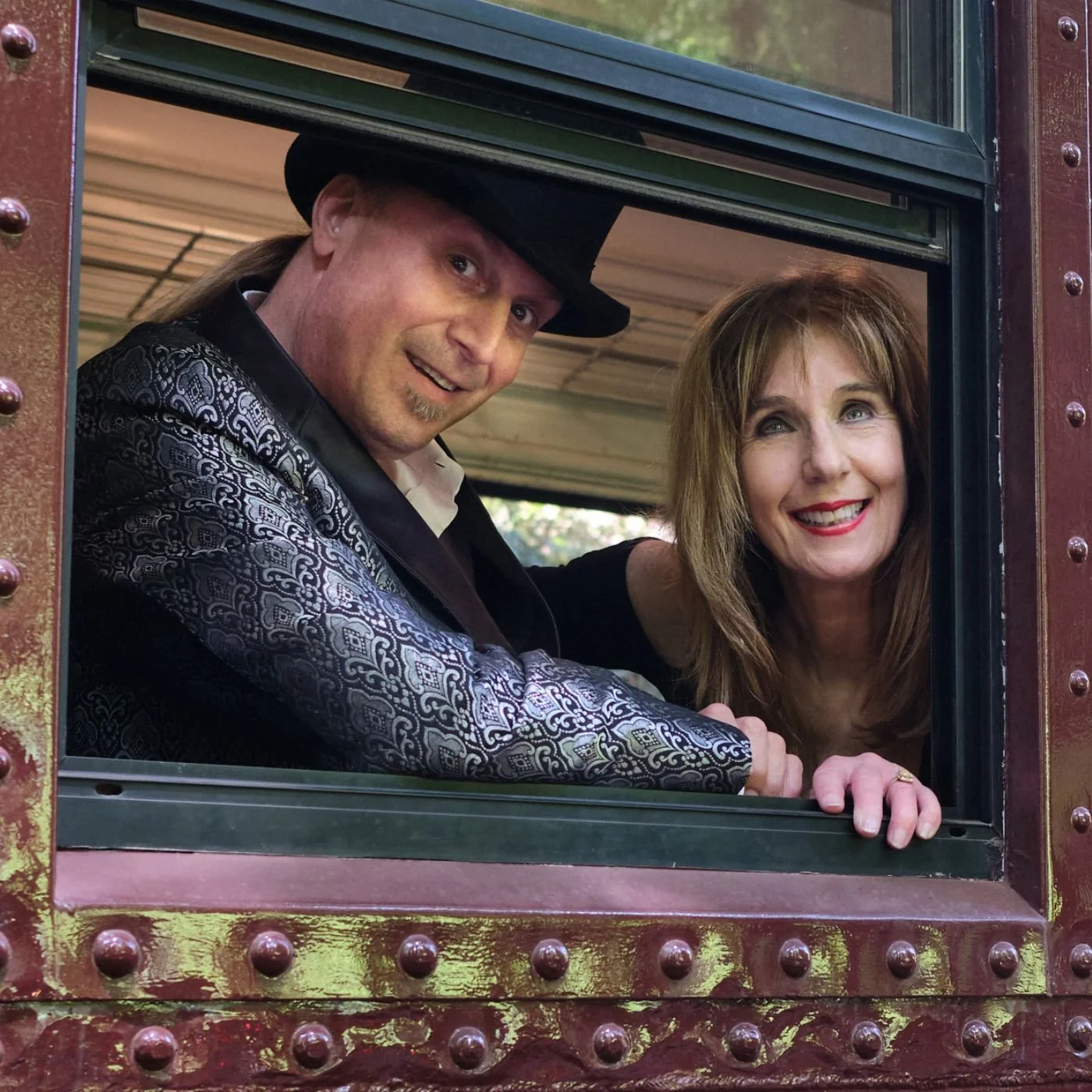
Why is it important that we preserve and spread the blues? What is the role of music in today’s society? (The Lucky Losers / Photo by Eric Fingal)